This report provides a comprehensive regional assessment of laws, policies, and services addressing violence against women and girls (VAWG) across nine countries in the Middle East and North Africa.
Using the Regional Index on VAWG as a monitoring and analytical tool, the report measures progress and main gaps across seven key categories: legal frameworks, institutional procedures, State-funded services, data systems, preventive programmes, professional capacity of first responders, and national and regional coordination mechanisms. The report aims to support evidence-based policymaking, strengthen accountability, and guide reform and cooperation efforts to eliminate all forms of VAWG.
The national reports on 2024 Regional Index on VAWG of Algeria, Egypt, Iraq, Jordan, Lebanon, Morocco, Palestine, Syria and Tunisia are available on the Regional Observatory on VAWG. The Regional Observatory on VAWG is hosted by EuroMed Feminist Initiative in is regional office in Amman.
The purpose of this study is to assess the prevalence, drivers and manifestations of VAWG, to identify legal, institutional and service gaps and provide evidence-based recommendations for policymakers to formulate informed policies and targeted interventions to combat VAWG, and to civil society and international partners to foster the development of these policies and interventions. It contributes to the analytical and monitoring work of the Regional Observatory on Violence against Women and Girls (VAWG), hosted by EuroMed Feminist Initiative (EFI), by generating country-level evidence to support regional advocacy and policy dialogue. This study is supported by the Deutsche Gesellschaft für Internationale Zusammenarbeit (GIZ) as part of the programme “Strengthening Participation, Peaceful Coexistence and Equality in Iraq” (SPACE), funded by the German Federal Ministry for Economic Cooperation and Development (BMZ).
This fact sheet presents key findings from the 2025 National Assessment on VAWG in Iraq and the KR-I, conducted by the Regional Observatory on VAWG at EuroMed Feminist Initiative. It highlights the prevalence, drivers, and forms of violence; access to services; legal and policy frameworks; and provides evidence-based recommendations to support national strategies for prevention, protection, and response.
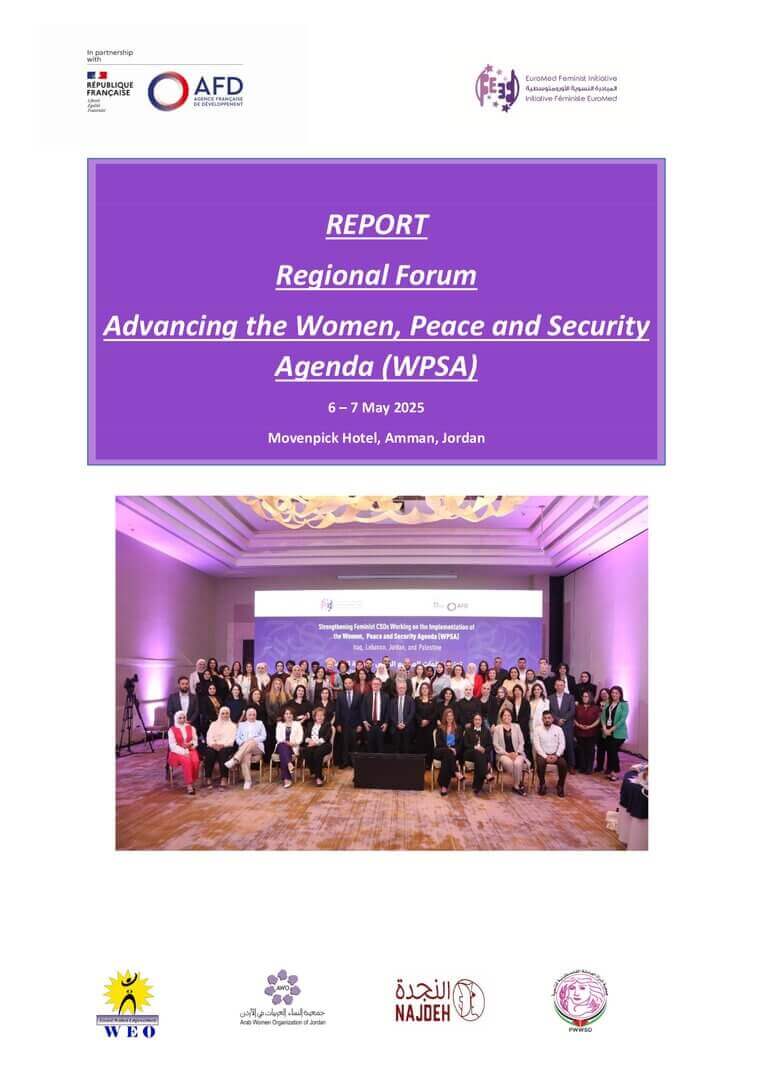
The First Regional Forum “Advancing the Women, Peace and Security Agenda (WPSA),” organised under the patronage of H.E. Ms Wafaa Bani Mostafa, Jordan’s Minister of Social Development and the Head of the Inter-Ministerial Committee for Women’s Empowerment, was held on 6-7 May 2025 in Amman, Jordan, aiming to advance the WPSA in the region. It took place within the framework of the regional project Strengthening Feminist CSOs for the Implementation of the Women, Peace and Security Agenda in Iraq, Lebanon, Jordan and Palestine, implemented by EuroMed Feminist initiative and funded by the Support Fund for Feminist Organisations of the Agence Française de Développement (AFD) and the French Ministry for Europe and Foreign Affairs. The Forum was organised by EuroMed Feminist Initiative (EFI) in partnership with the consortium of EFI member organisations: Arab Women Organization (AWO) in Jordan, Association Najdeh in Lebanon, Women Empowerment Organization (WEO) in Iraq and the Palestinian Working Women Society for Development (PWWSD) in Palestine.
"Children in Figures" provides an in-depth statistical overview of the situation of children in Algeria, using official national data. It explores various aspects of children's lives, including demographics, family structures, housing conditions, access to clean water, and healthcare. The report examines key health indicators such as infant mortality, vaccination coverage, neonatal care, and nutrition, with a focus on breastfeeding practices and early childhood development. The education system is also analysed, detailing school enrolment rates from preschool to secondary education, gender disparities, and the challenges faced by children in rural and disadvantaged areas.
The first Mediterranean Feminist Forum was organised by the EuroMed Feminist Initiative, in partnership with the Interministerial Delegation for the Mediterranean of the French Ministry for Europe and Foreign Affairs, and with the contribution of the Arab World Institute in Paris, the French Development Agency, Wimbeetech, and Campusna. The forum aimed to contribute to valorising and strengthening CSO networks on both sides of the Mediterranean, while widening the space for cooperation and joint action. It also sought to promote initiatives led and implemented by women’s rights organisations and to support the diversification of their funding sources.
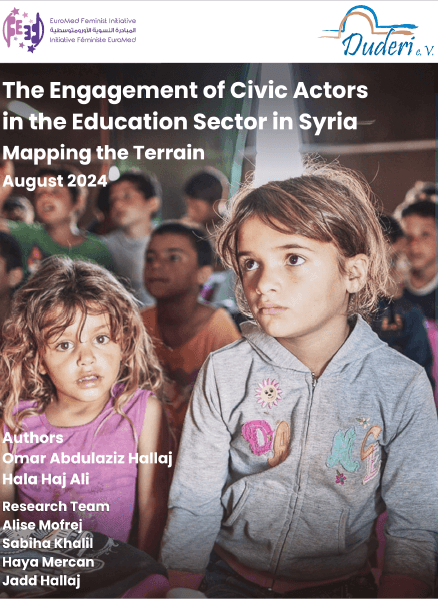
This report presents the results of a mapping exercise aimed at understanding the role of civil society actors in the provision of educational services during the conflict in Syria. It uses a combination of qualitative interviews, extensive desk research, and online verification of CSOs’ work visibility, networking, and reputation to provide a 360-degree view of the conditions on the ground. The assessment was conducted to answer two sets of questions. One focused on evaluating CSOs’ capacity to act as key stakeholders in the education sector. The other aimed to understand how values of social peace and equal citizenship are being interpreted and promoted by CSOs. This report provides a synthesis of the research findings. A subsequent report will focus on lessons learned and key recommendations, which will be issued separately in the form of a policy paper.
This study for assessing VAWG in Syria was conducted by EFI and the Regional Observatory on VAWG within the framework of the project “Implementing the Common Agenda to Combat VAWG and Promote Inclusive Peace Building Processes in Syria,” funded by the European Union (EU). The project aims to contribute to inclusive, participatory and representative decision-making in Syria, through combating VAWG and improving women’s participation in local and international decision-making.
This study presents how the dynamics of exclusion and violence have interplayed with education in three regions of Syria, namely A s Sweida, Ar Raqqa and Idlib. The three analysed regions fall under different authorities: A s Sweida falls under the authority of the Syrian regime, while Idlib falls under the Ta hrir Al Sham Organisation, and Raqqa falls under an authority of self-governance. The study will explore how the curriculum in each of these regions of Syria is shaped by their incumbent authorities, understanding how this subsequently affects the society’s understanding of exclusion and violence based on gender, race, ethnicity, and religion.
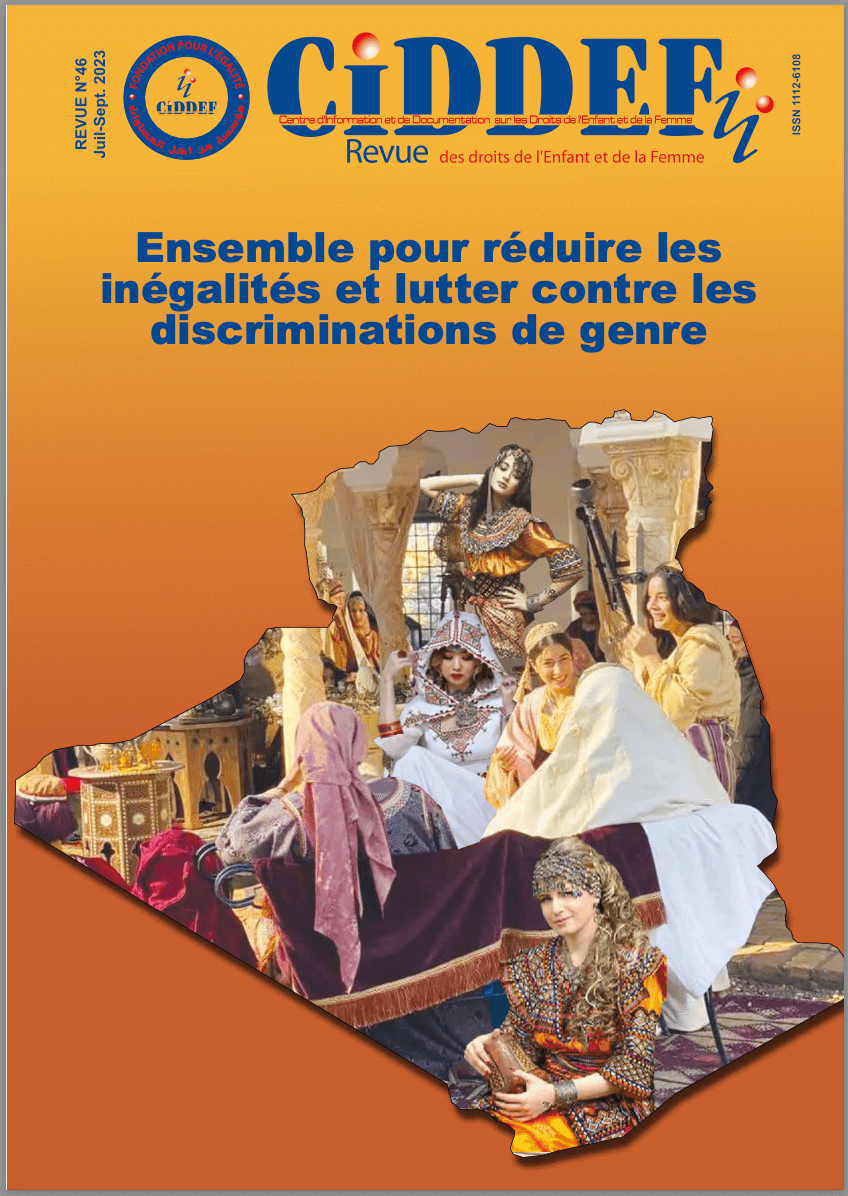
The 46th edition of the CIDDEF review features important events, studies, and projects on women’s rights issues in Algeria. It contains among other the results of a “Study on the opinions and attitudes of Algerians towards the value of equality between men and women and children's rights”. Three opinion polls (2000, 2008, 2022) study the current opinion of Algerians - young people and adults - on gender equality and measures its evolution over a period of twenty years. The questions addressed the social roles of women and men, marriage, the guardianship of children, divorce, women's work and women's representation in political life. Certain practices were also questioned: violence, the use of women's income, and relations with children. This 46th edition provides information on two important projects: the project “Working together to reduce inequalities and combat gender discrimination” initiated in 2021 and the national campaign “Avec Elle.s / M’3ah’a.ouna”, “Dhayen, Ykafi, Stop” aiming at combating violence against women and girls. And finally, it presents the national report on 2021 Indicators on Violence Against Women and Girls in Algeria. To know more about CIDDEF and its activities: https://ciddef-dz.com
Brief of the study conducted by Duderi e.V in partnership with EuroMed Feminist Initiative as part of the project: Education for Peacebuilding – Pilot Phase. This study presents how the dynamics of exclusion and violence have interplayed with education in three regions of Syria: namely As-Sweida, Ar-Raqqa, and Idlib. The central focus of this study lies in the intricate interplay between the current educational system and peacebuilding.
EuroMed Feminist Initiative provides expertise in the field of equality and advocates for women’s universal human rights as inseparable from democracy building and citizenship, for political solutions to all conflicts, and for the right of peoples to self-determination. The Regional Observatory on Violence Against Women and Girls (VAWG) is a civil society mechanism to follow up on the implementation of the Union for the Mediterranean (UfM) Ministerial Process and Declarations on strengthening the role of women in society — particularly in the areas of combating all forms of VAWG and promoting the Women, Peace and Security Agenda (WPSA). The Regional Observatory aims to produce knowledge and enhance understanding and awareness of VAWG and its continuum during peacetime and armed conflicts, as well as the implementation of the WPSA. To this end, the Regional Observatory identifies gaps, collects and analyses data on existing laws and on all areas of life, and provides recommendations to support better-informed and evidence-based policymaking and legislation aimed at ending VAWG.
The Regional Forum, organised in partnership with the Jordanian Ministry of Education, aimed to share experiences and discuss strategies to achieve greater equality in and through education in the region. The Forum also provided a unique opportunity for teachers from the pilot schools to come together and exchange lessons learned, so that best practices can be scaled up at the national level. The Forum gathered over 130 participants from Algeria, Egypt, Jordan, Lebanon, Morocco, Palestine, and Tunisia, including ministers and representatives from Ministries of Education, Ministries of Women’s Affairs and women’s machineries, as well as teachers, experts, members of parliament, and representatives of women’s rights organizations.
Enforced disappearance is one of the most serious human rights violations due to its impact on the disappeared person, their relatives, their community, and, ultimately, society as a whole. Its impact does not end with the end of the conflict. Since the 1970s, the Syrian government has used enforced disappearance as a strategy to eliminate opponents, terrorize, and silence dissent. It has been the government’s most important weapon in crushing the popular movement against it. Enforced disappearances resulting from arbitrary detention, abduction, deprivation of liberty, denial of protection under the law, and the right to security and freedom from torture and other inhuman treatment have been systematically practiced—amounting to a crime against humanity. Download the report to read the full version.
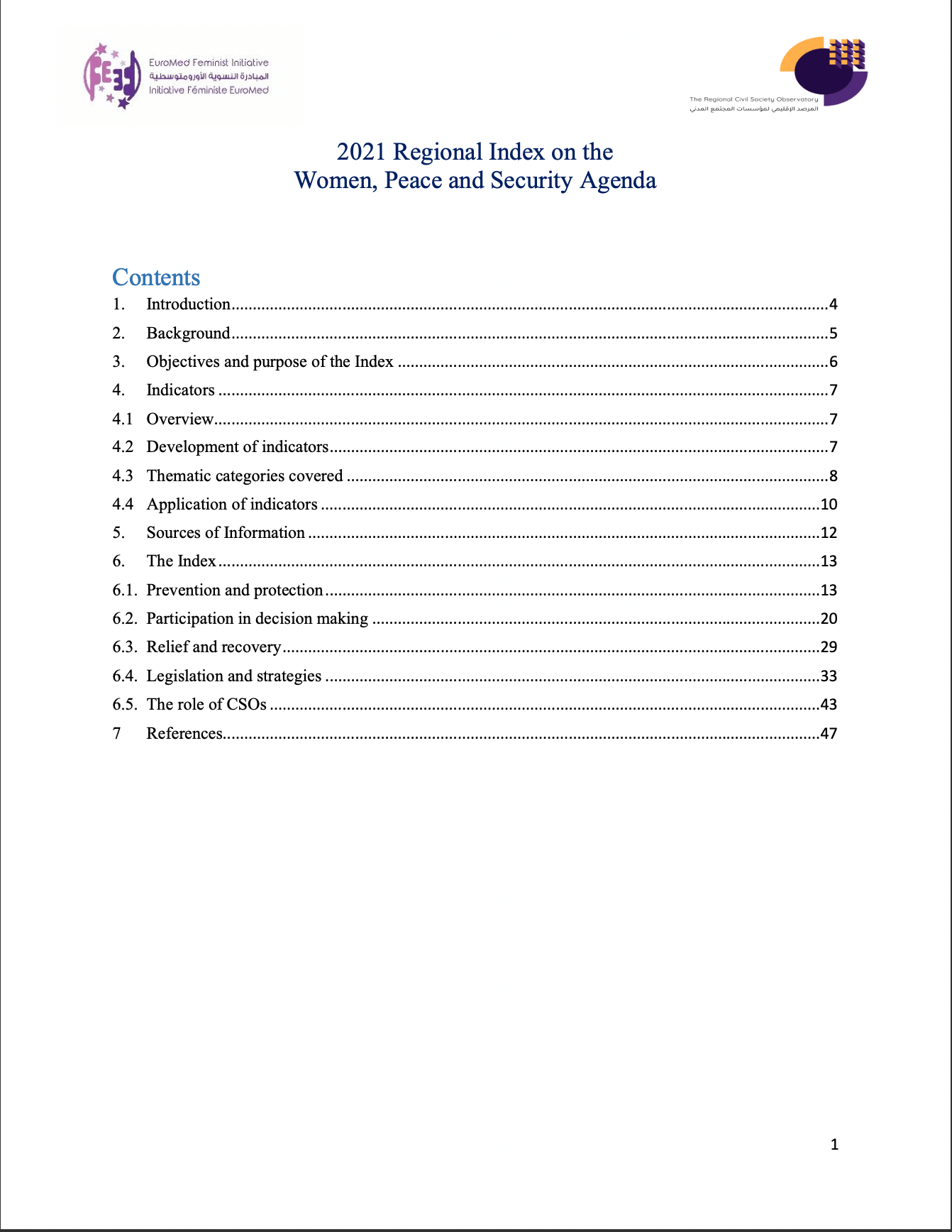
The Regional Observatory on VAWG, hosted by the EuroMed Feminist Initiative in Amman, Jordan, and funded by the European Union (EU), developed a Regional Index on VAWG in 2020 to ensure continuous follow-up and data collection on laws and policies, including analysis of barometer results, in seven South Mediterranean countries participating in the project: Algeria, Egypt, Jordan, Lebanon, Morocco, Palestine, and Tunisia. The 2021 Regional Index provides information on public policies and measures regarding the Women, Peace, and Security Agenda (WPSA) in a simple and accessible format.
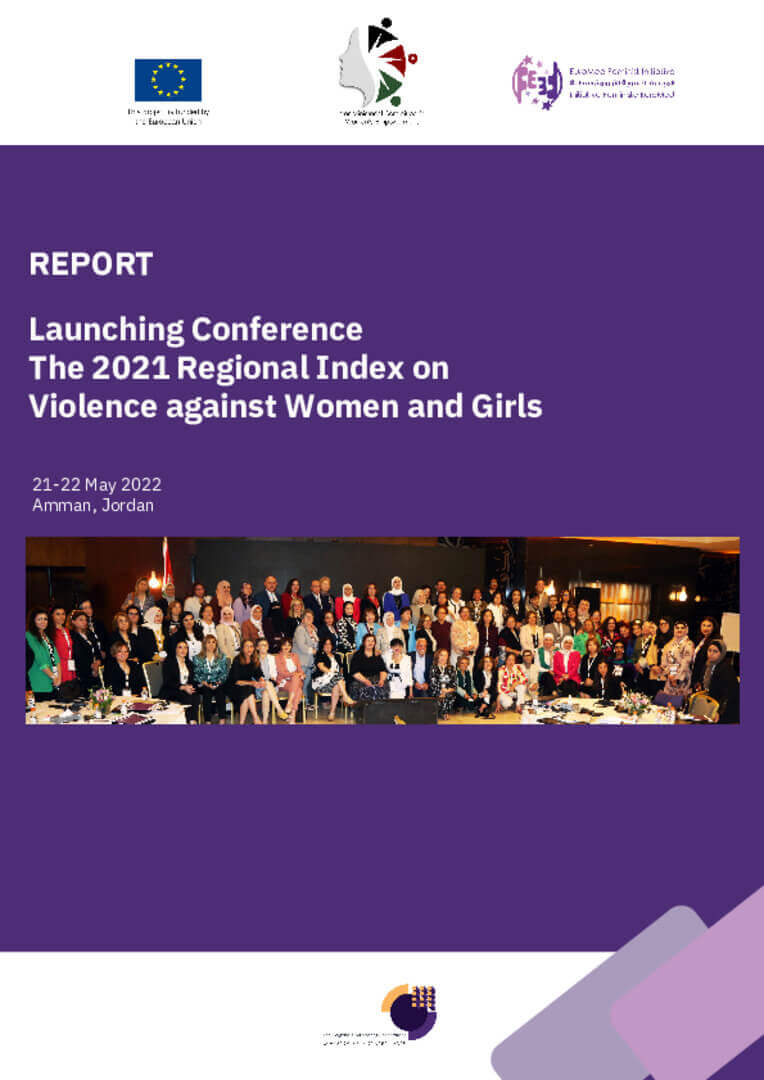
To follow up on the implementation of the Ministerial Declaration of the 4th UfM Ministerial Conference (November 27, 2017, Cairo), in the area of combating violence against women and girls (VAWG) and the Women, Peace, and Security Agenda (WPSA), the EuroMed Feminist Initiative has, since 2019, implemented a multi-year regional program titled “Combating VAWG in the Southern Mediterranean,” funded by the European Union (EU). As part of this effort, it established the Regional Observatory as an independent mechanism to monitor the implementation of the Ministerial Declaration in the aforementioned area. The Regional Observatory is hosted in the regional office of the EuroMed Feminist Initiative in Amman, Jordan. The conference aimed to launch the 2021 Regional Index on VAWG and to discuss the main results, scope, and potential use of the findings at both national and regional policy levels. The conference also aimed to provide policy recommendations on combating VAWG.
The Syrian Civil Society Women’s Rights Conference, aimed at combating violence against women and girls as a main obstacle to women’s participation in decision-making and peacebuilding, was held over two days on December 9–10, 2021, in Brussels, both in-person and online. The conference brought together more than 100 representatives of Syrian women’s rights organizations, civil society organizations, and local initiatives, as well as representatives from international organizations, the European Union (EU), and the United Nations (UN).

Since the onset of the Syrian conflict in 2011, millions of Syrians have sought asylum in neighboring countries. This report aims to assess the level of inclusion of a gender perspective in the Syrian crisis response in Lebanon, Jordan, and Iraq. In addition to the Syrian crisis, each of these countries faces existing political, social, economic, and legal constraints that have exacerbated the difficulties encountered by refugee and vulnerable host populations, particularly women and girls. The situation of Syrian refugee women is shaped by local, regional, and international policy frameworks and social contexts. Although the three countries have adopted different approaches to address the refugee crisis—with certain contextual and legal variations—many challenges and conditions remain similar across borders.
The spread of the Covid-19 virus and the precautions taken to limit its effects have generated impacts and consequences that exceed the health aspect to include the social, economic, and psychological fields. It also increased variety, inequality, and discrimination against marginalized groups, and created conditions and factors that exposed women and children to more violence. Its impact on populations living in emergency humanitarian contexts has been much greater, in particular the displaced and refugees’ women who have left their homes due to conflicts in Iraq and Syria, and women in host communities who already suffer from lack of services and harsh living conditions, as well as the marginalization and inequality they face before the pandemic as a result of their situation.
The current assessment provides an analysis of the reality of gender-based violence among refugee and internally displaced women and women in the host community in Iraq. It sheds light on the social, economic, and psychological impacts the pandemic has left on this segment of the population, which are risk factors that may increase their likelihood of exposure to violence. It also identifies the most important gaps in the response provided. The assessment took place in the frame of the gender regional program “Strengthening access to protection, participation and services for women refugees, IDPs and host communities” funded by the European Union (EU) Regional Trust Fund in Response to the Syrian Crisis, the EU MADAD Fund.