This publication presents key lessons learned, best practices, and recommendations for advancing the Women, Peace and Security Agenda (WPSA) in Iraq, Jordan, Lebanon, and Palestine, based on the outcomes of the Regional Forum held in Amman on 6–7 May 2025 and convened by EuroMed Feminist Initiative (EFI) with feminist and women-led civil society organisations. It highlights the role of feminist civil society in strengthening accountability and inclusive policymaking, and offers actionable recommendations to support rights-based and sustainable implementation of the WPSA across local, national, regional, and international levels.
Post-conflict reconstruction renews Syria’s social, economic, and political structures to end chaos, restore stability, and prevent future conflict. EFI (EuroMed Feminist Initiative) developed this handbook with Syrian experts to ensure women’s participation, address GBV, and embed gender equality across all reconstruction stages. It offers systematic guidance and actionable recommendations for decision-makers, donors, and civil society to guide Syria’s transition toward democracy and sustainable development.
Algeria has been committed to aligning its national legislation with the international conventions it has signed, to protect children. The Convention on the Rights of the Child, along with the two Optional Protocols addressing the sale of children and pornography, as well as the one dealing with the involvement of children in armed conflicts, and the African Charter on the Rights and Welfare of the Child, have been ratified by Algeria. The provision of protection to children have been defined by the law in Algeria, stating the responsibilities of families, parents, communities and the state. The Directory of Social Services (DASS) provides the list, contacts and locations of state and non-state institutions that can be contacted or outreached to provide care and protection for children across the national territories in Algeria. ➤ Nadia Ait Zai, President of CIDDEF & Board Member of the EuroMed Feminist Initiative (IFE-EFI): www.bit.ly/Nadia-Ait-Zai
This policy paper was developed to draw lessons learned from a detailed research initiative conducted by Duderi to map the role of civic actors in the education sector in Syria. The research provided an in-depth review of conditions in six regions, covering local circumstances across all zones of political control that have emerged during the conflict. This policy paper aims to synthesize the key lessons learned from the research and offers targeted and actionable recommendations to key stakeholders.
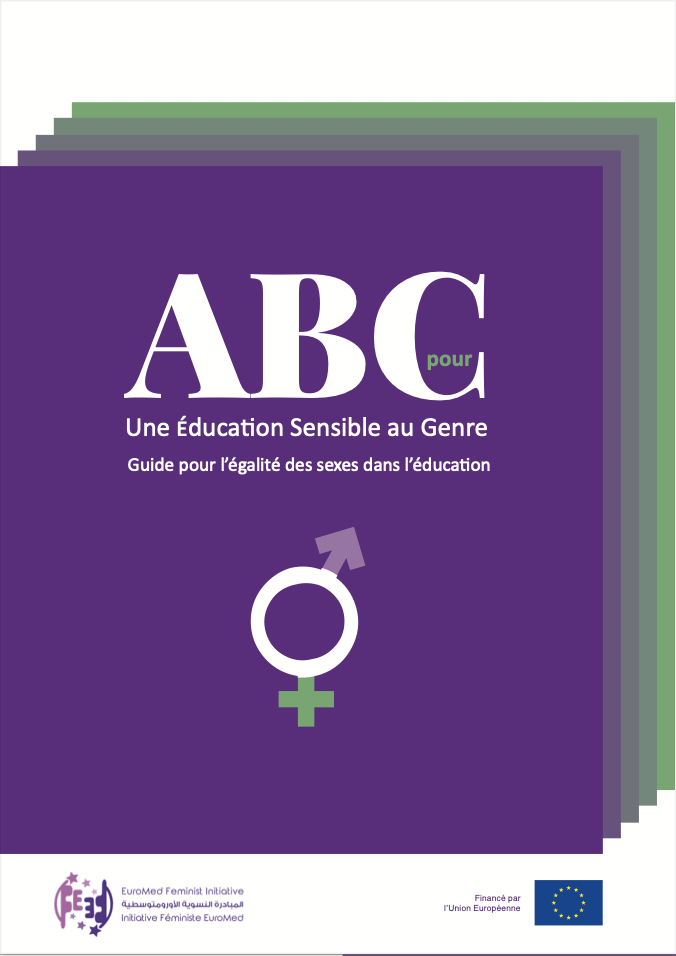
This manual aims to make a feminist perspective on what constitutes a democratic education accessible by focusing on providing answers to the questions of why and also how to promote gender-sensitive education.
This manual is designed to support teachers in schools and educational institutions by providing practical guidance on gender-sensitive education and the promotion of gender equality. It addresses key educational approaches and practices relevant to the Southern Mediterranean context, aiming to enhance awareness, inclusion, and equitable learning environments for all students.
School is a microcosm where the balances, power relations, and inequalities at work in society are already being sketched out. But school is not only a reflection of society; it can also influence it in several ways. First, by striving to dismantle the forms of oppression and inequalities that exist in society within the school environment.
The second in the ABC series; and following up on the first handbook “ABC for a Gender Sensitive Constitution”, this ABC aims to bring insight, raise awareness, and stimulate debate on the need to mainstream gender perspective in law making and enhance democracy. It strives to be a tool of change and a trusted reference for lawyers, students, human rights activists, and civil society.
The Unified Executive Plan for the Implementation of UN Security Council Resolution 1325 in Iraq
Master plan: Implementation of the United Nations Security Resolution 1325 in Iraq
The ABC for a Gender Sensitive Constitution is a handbook aimed at guiding constitution-makers in their endeavor to draft or amend constitutions from a gender sensitive perspective and at educating the general public.
The history shows that achieving positive changes for women’s rights always requires the involvement of women’s themselves. That’s why the backbone of our project is raising awareness, involving the grassroots associations and all the spheres of the societies in order to promote international conventions and regional agreements as a common working frame and as tools to improve the status of gender equality and women’s rights and make our governments accountable of their implementation.
Promoting a common agenda for equality between women and men through Istanbul Process Project funded by the European Union.