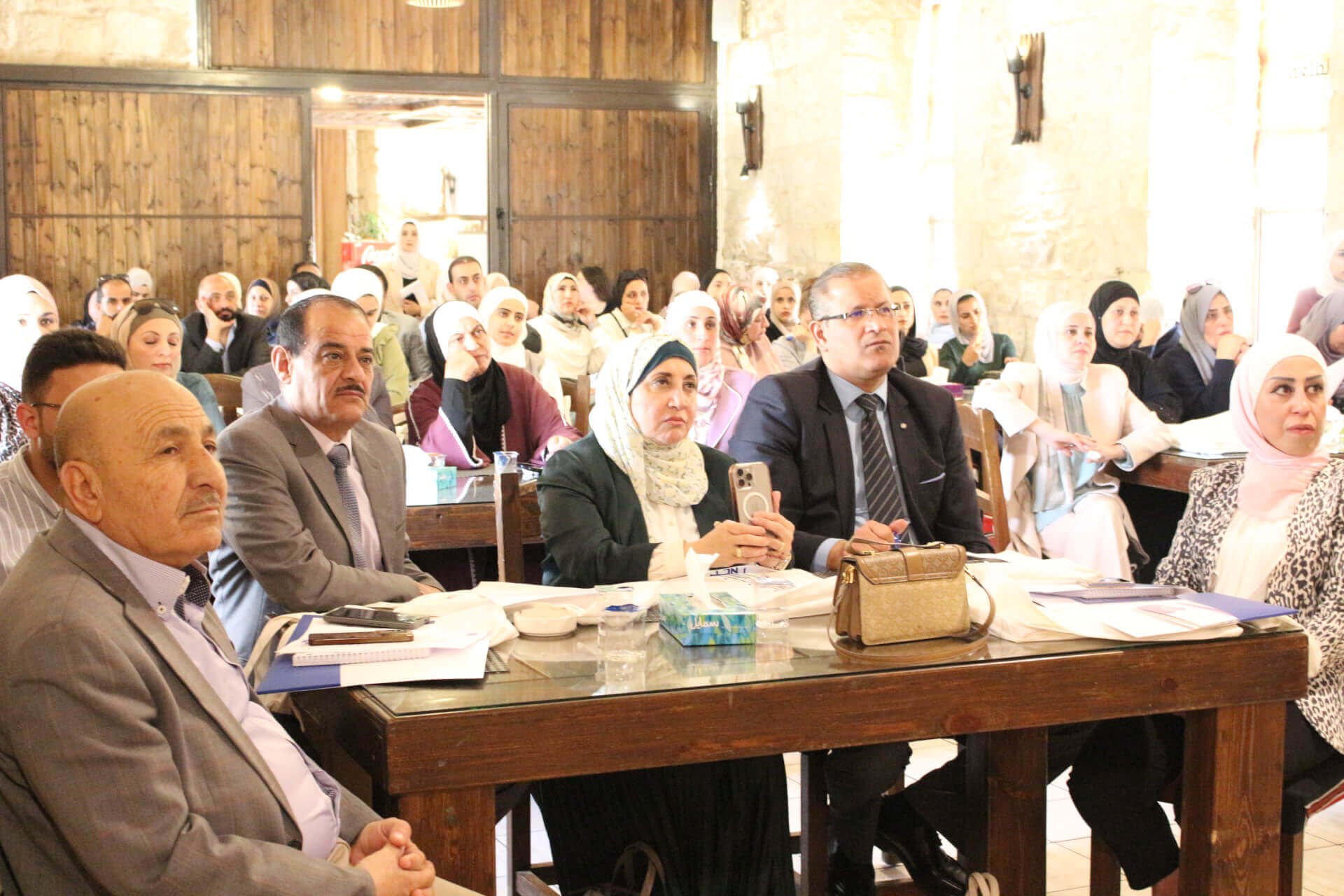
Local dialogue in Karak, Jordan on Ending Violence Against Women and Girls
2025-04-30T08:00:00Z - 2025-04-30T10:30:00Z
Local dialogue in Karak, Jordan on ending violence against women and girls, took place in the frame of the third national campaign “Her Life Without Violence, Her Future Without Fear”
30st April 2025, Karak
Under the Patronage of His Excellency Chairman of the Karak Governorate Council Dr. Abdullah Al-Abbadlah, a local dialogue on combating violence against women and girls (VAWG) was held on Wedensday, 30st April 2025, in Zarqa, Jordan. It took place within the framework of the third awareness campaign “Her Life Without Violence, Her Future Without Fear”, which is part of the three-year national campaign “No Silence, No Tolerance” carried out by EuroMed Feminist Initiative (EFI), Justice Centre for Legal Aid (JCLA), Children Villages SOS, Institute for Family Health (IFH), and the National Council of Family Affairs (NCFA), Information and Research Center - King Hussein Foundation (IRC-KHF), Tafila Women's Society (TWCS), Arab Women's Organization (AWO), and Family Guidance Awareness Center (FGAC). This initiative is held within the framework of the project "Improving Access to Comprehensive Gender-based Violence Services in Jordan", funded by the European Union (EU) and implemented by the Spanish Agency for International Development Cooperation (AECID), with the collaboration of the United Nations Population Fund (UNFPA).
The local dialogue, organised by EuroMed Feminist Initiative (EFI), aimed to create an open and inclusive space for community members and leaders, service providers, and civil society to come together and engage in meaningful discussions on preventing violence and promoting survivor-centered services across Jordan. It served as a platform for fostering proactive community efforts and raise awareness about the availability of essential services for survivors of gender-based violence as one of the means to prevent violence against women and girls.
Throughout the session, participants emphasized the critical role of community support and the importance of involving men in disseminating accurate information and actively participating in raising awareness and combating VAWG. The dialogue promoted the key messages of the campaign, linked to the accessibility of services, the need to challenge harmful norms and misconceptions, and the value of working collectively to foster a safe and supportive community environment.
By encouraging open conversation, the dialogue also focused on empowering survivors to feel safe in seeking help, debunking persistent myths and stereotypes, and reinforcing the importance of prevention. Ultimately, the session reaffirmed that community engagement is a vital driver of change—one that protects survivors and contributes to building a more informed, resilient, and equitable society.
The event opened with remarks from Ms. Hadeel Abu Hayyaneh – EuroMed Feminist Initiative, and His Excellency Chairman of the Karak Governorate Council Dr. Abdullah Al-Abbadlah.
Ms. Ruba Emad, EuroMed Feminist Initiative, presented in the first session an overview of the third national awareness campaign “Her Life Without Violence, Her Future Without Fear” and shared the key awareness messages, of which 20 based on real-life testimonials from service beneficiaries and 10 designed to reinforce prevention actions. In addition to printed brochures disseminated in six governorates, and SMS outreach reaching 500,000 recipients, billboard placements, and influencer-led videos to engage youth audiences, community dialogues are organised in Irbid, Karak, and Zarqa, along with scheduled media appearances, further extending the campaign’s reach and public engagement.
The campaign presentation was followed by a panel discussion titled “Building Bridges: Connecting Prevention and Support for VAWG”, moderated by Ms. Hadeel Abu Hayyaneh, EuroMed Feminist Initiative. The discussion brought together key voices from health, education, psychosocial services, and local government to explore practical ways to bridge the gap between prevention and service delivery.
Following the presentation, a panel discussion titled "Building Bridges: Connecting Prevention and Support for Violence Against Women and Girls (VAWG)" took place, moderated by Ms. Hadeel Abu Hayyaneh from the EuroMed Feminist Initiative. The session brought together prominent voices representing government bodies, academia, vocational training institutions, and civil society organisations, to explore effective ways to link prevention with the provision of services.
The panel featured Mr. Nasser Al-Ma’aqabeh, Director of the Karak Development Directorate at the Ministry of Social Development (MoSD); Dr. Wijdan Al-Karaki, Director of the Queen Rania Centre for Educational and Psychological Studies at Mutah University; Eng. Shireen Al-Btoush, Director of the Vocational Training Centre in Karak; and Mrs. Tamara Mostafa, Director of the Karak Centre of the Arab Women Organization. The discussion highlighted the challenges faced by survivors of violence in accessing protection and support services, examined ways to enhance coordination and integration among relevant actors, and emphasised the importance of engaging the local community – including men and youth – in prevention and awareness efforts.
The discussion underscored the urgent need for stronger multi-sectoral cooperation, effective referral systems, and community-based preventive strategies that go beyond awareness to tangible support.
Following the panel discussion, attendees participated in an interactive “Violence Line” activity led by Ms. Khawla Abu Ria, Social Worker and Case Manager at the Family Awareness and Counselling Center. This engaging segment encouraged participants to reflect on the forms of violence women and girls experience and how communities can act preventively.
The event concluded with moving testimonies from women beneficiaries, who shared their personal journeys of resilience and transformation. Their testimonies illustrated the profound impact of accessible, survivor-centered support services and the power of awareness to drive change.