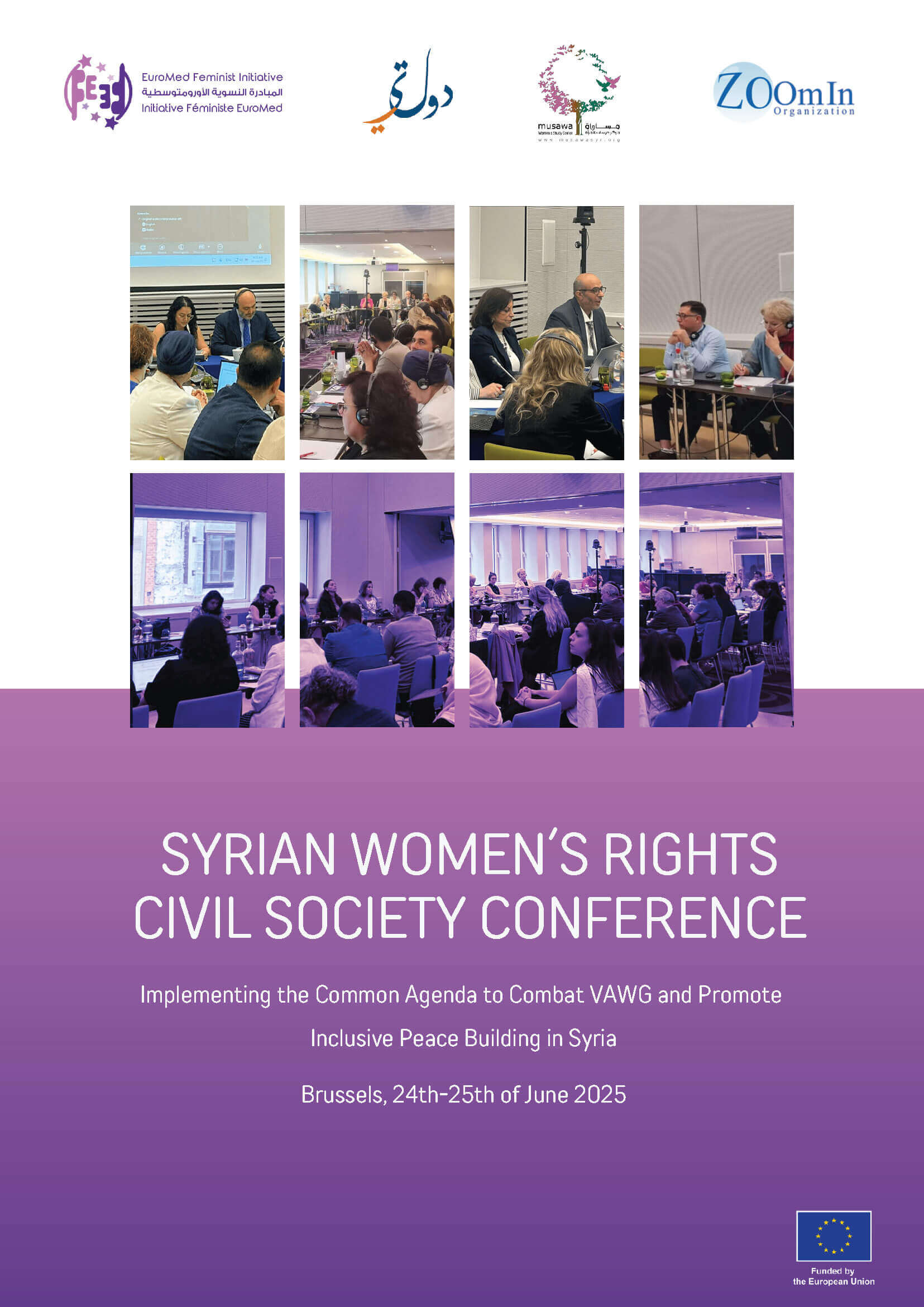
The Second Syrian Women’s Rights Civil Society Conference, titled “Implementing the Common Agenda to Combat Violence Against Women and Girls and Promote Inclusive Peacebuilding in Syria,” was held on 24–25 June 2025 in Brussels. The conference was organised within the framework of the project “Implementing the Common Agenda to Combat Violence Against Women and Girls and Promote Inclusive Peacebuilding Processes in Syria,” implemented by EuroMed Feminist Initiative (EFI) in partnership with Musawa, Dawlaty, and Zoom In, and funded by the European Union. The event convened more than 60 Syrian and international stakeholders, including representatives from the European Union, the European Parliament, the Office of the United Nations Secretary-General’s Special Envoy for Syria, and various international organisations. Participants reaffirmed the central role of women and women’s rights in Syria’s reconstruction and in advancing a democratic, peaceful, and equal future.
This report provides a comprehensive regional assessment of laws, policies, and services addressing violence against women and girls (VAWG) across nine countries in the Middle East and North Africa.
Using the Regional Index on VAWG as a monitoring and analytical tool, the report measures progress and main gaps across seven key categories: legal frameworks, institutional procedures, State-funded services, data systems, preventive programmes, professional capacity of first responders, and national and regional coordination mechanisms. The report aims to support evidence-based policymaking, strengthen accountability, and guide reform and cooperation efforts to eliminate all forms of VAWG.
The national reports on 2024 Regional Index on VAWG of Algeria, Egypt, Iraq, Jordan, Lebanon, Morocco, Palestine, Syria and Tunisia are available on the Regional Observatory on VAWG. The Regional Observatory on VAWG is hosted by EuroMed Feminist Initiative in is regional office in Amman.
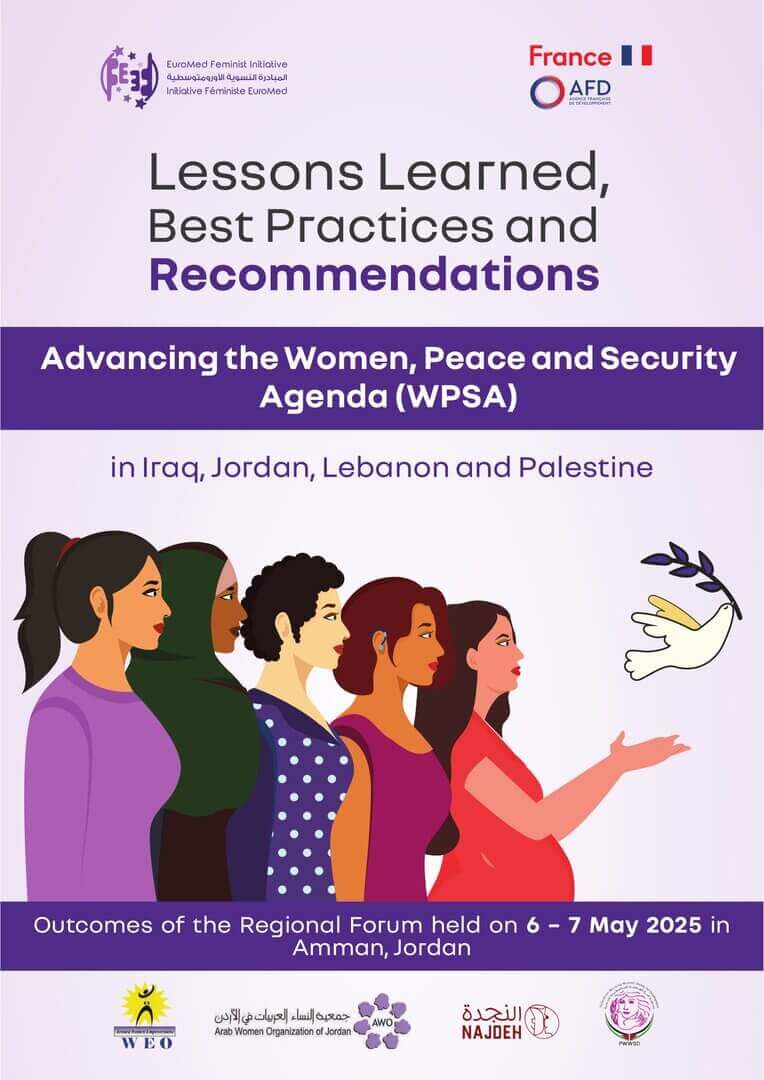
This publication presents key lessons learned, best practices, and recommendations for advancing the Women, Peace and Security Agenda (WPSA) in Iraq, Jordan, Lebanon, and Palestine, based on the outcomes of the Regional Forum held in Amman on 6–7 May 2025 and convened by EuroMed Feminist Initiative (EFI) with feminist and women-led civil society organisations. It highlights the role of feminist civil society in strengthening accountability and inclusive policymaking, and offers actionable recommendations to support rights-based and sustainable implementation of the WPSA across local, national, regional, and international levels.
The purpose of this study is to assess the prevalence, drivers and manifestations of VAWG, to identify legal, institutional and service gaps and provide evidence-based recommendations for policymakers to formulate informed policies and targeted interventions to combat VAWG, and to civil society and international partners to foster the development of these policies and interventions. It contributes to the analytical and monitoring work of the Regional Observatory on Violence against Women and Girls (VAWG), hosted by EuroMed Feminist Initiative (EFI), by generating country-level evidence to support regional advocacy and policy dialogue. This study is supported by the Deutsche Gesellschaft für Internationale Zusammenarbeit (GIZ) as part of the programme “Strengthening Participation, Peaceful Coexistence and Equality in Iraq” (SPACE), funded by the German Federal Ministry for Economic Cooperation and Development (BMZ).
This fact sheet presents key findings from the 2025 National Assessment on VAWG in Iraq and the KR-I, conducted by the Regional Observatory on VAWG at EuroMed Feminist Initiative. It highlights the prevalence, drivers, and forms of violence; access to services; legal and policy frameworks; and provides evidence-based recommendations to support national strategies for prevention, protection, and response.
Violence against women and girls is a complex and deeply rooted issue influenced by social, cultural, legal, and political factors. The persistence of discriminatory laws and prevailing social norms continues to limit women’s rights and freedoms. Many forms of violence — including domestic violence, early and forced marriage, sexual harassment, and economic violence — are widespread and often go underreported. This policy brief aims to provide a comprehensive overview of the current situation of violence against women and girls in Iraq and the Kurdistan Region of Iraq (KR-I), highlighting the legal and policy frameworks, identifying existing gaps, and offering practical recommendations to strengthen prevention, protection, and response mechanisms. It draws on evidence from national data, civil society reports, and international standards to support decision-makers and stakeholders in promoting equality and combating violence.
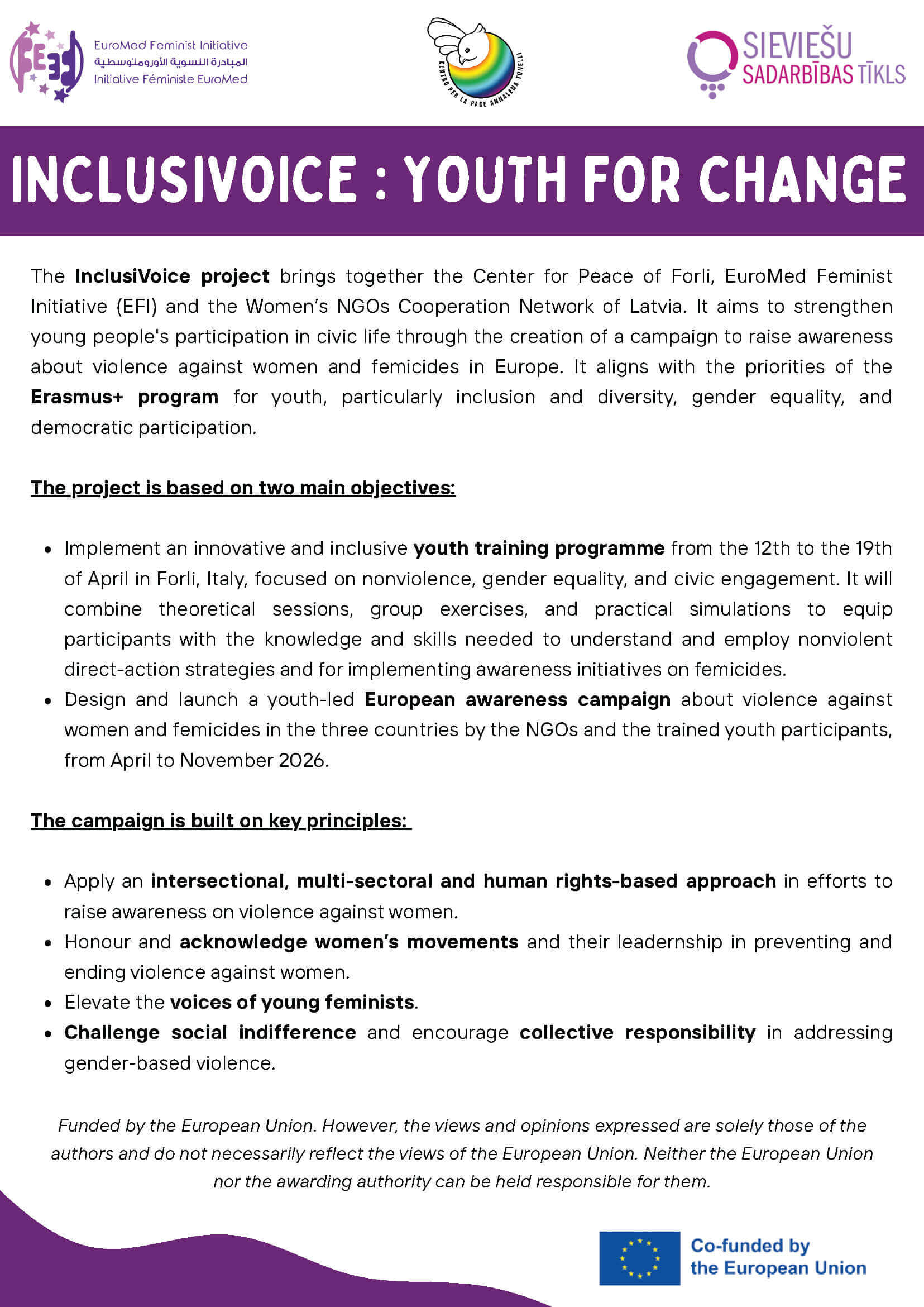
The InclusiVoice project brings together the Center for Peace of Forli, the EuroMed Feminist Initiative (EFI), and the Women’s NGOs Cooperation Network of Latvia. It aims to strengthen young people’s participation in civic life through the creation of a campaign to raise awareness about violence against women and femicides in Europe. The project aligns with the priorities of the Erasmus+ youth program, particularly in the areas of inclusion and diversity, gender equality, and democratic participation. Funded by the European Union. However, the views and opinions expressed are solely those of the author(s) and do not necessarily reflect the views of the European Union. Neither the European Union nor the awarding authority can be held responsible for them.
Post-conflict reconstruction renews Syria’s social, economic, and political structures to end chaos, restore stability, and prevent future conflict. EFI (EuroMed Feminist Initiative) developed this handbook with Syrian experts to ensure women’s participation, address GBV, and embed gender equality across all reconstruction stages. It offers systematic guidance and actionable recommendations for decision-makers, donors, and civil society to guide Syria’s transition toward democracy and sustainable development.
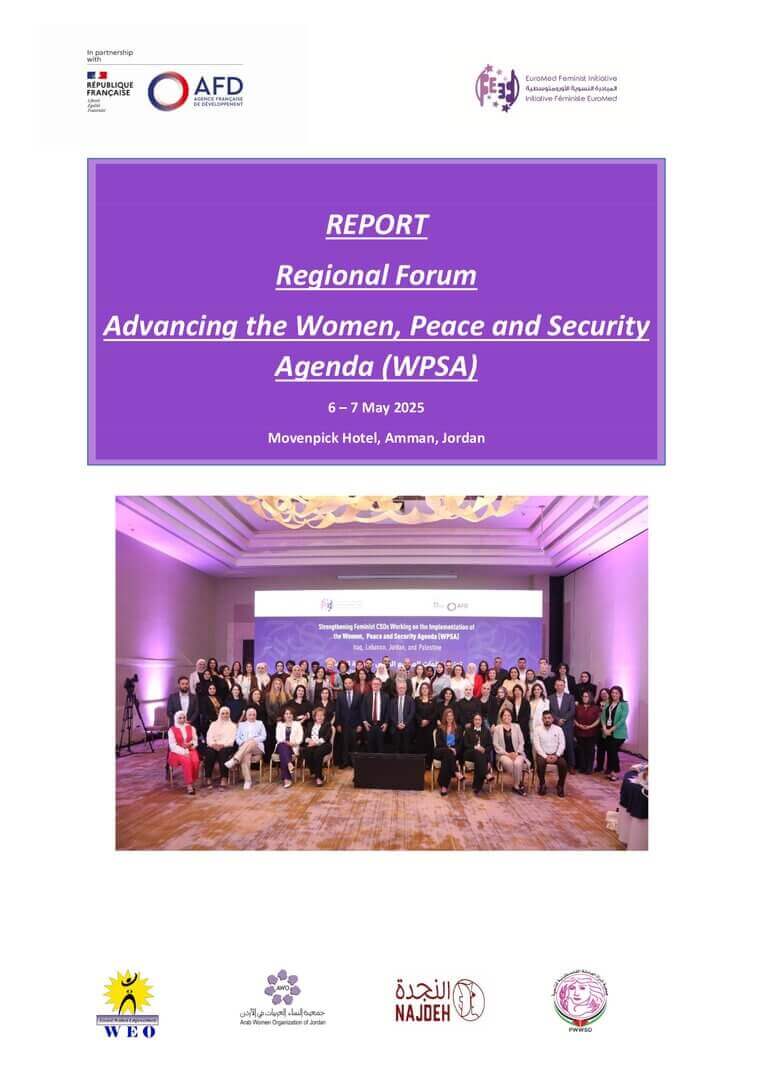
The First Regional Forum “Advancing the Women, Peace and Security Agenda (WPSA),” organised under the patronage of H.E. Ms Wafaa Bani Mostafa, Jordan’s Minister of Social Development and the Head of the Inter-Ministerial Committee for Women’s Empowerment, was held on 6-7 May 2025 in Amman, Jordan, aiming to advance the WPSA in the region. It took place within the framework of the regional project Strengthening Feminist CSOs for the Implementation of the Women, Peace and Security Agenda in Iraq, Lebanon, Jordan and Palestine, implemented by EuroMed Feminist initiative and funded by the Support Fund for Feminist Organisations of the Agence Française de Développement (AFD) and the French Ministry for Europe and Foreign Affairs. The Forum was organised by EuroMed Feminist Initiative (EFI) in partnership with the consortium of EFI member organisations: Arab Women Organization (AWO) in Jordan, Association Najdeh in Lebanon, Women Empowerment Organization (WEO) in Iraq and the Palestinian Working Women Society for Development (PWWSD) in Palestine.
"Children in Figures" provides an in-depth statistical overview of the situation of children in Algeria, using official national data. It explores various aspects of children's lives, including demographics, family structures, housing conditions, access to clean water, and healthcare. The report examines key health indicators such as infant mortality, vaccination coverage, neonatal care, and nutrition, with a focus on breastfeeding practices and early childhood development. The education system is also analysed, detailing school enrolment rates from preschool to secondary education, gender disparities, and the challenges faced by children in rural and disadvantaged areas.
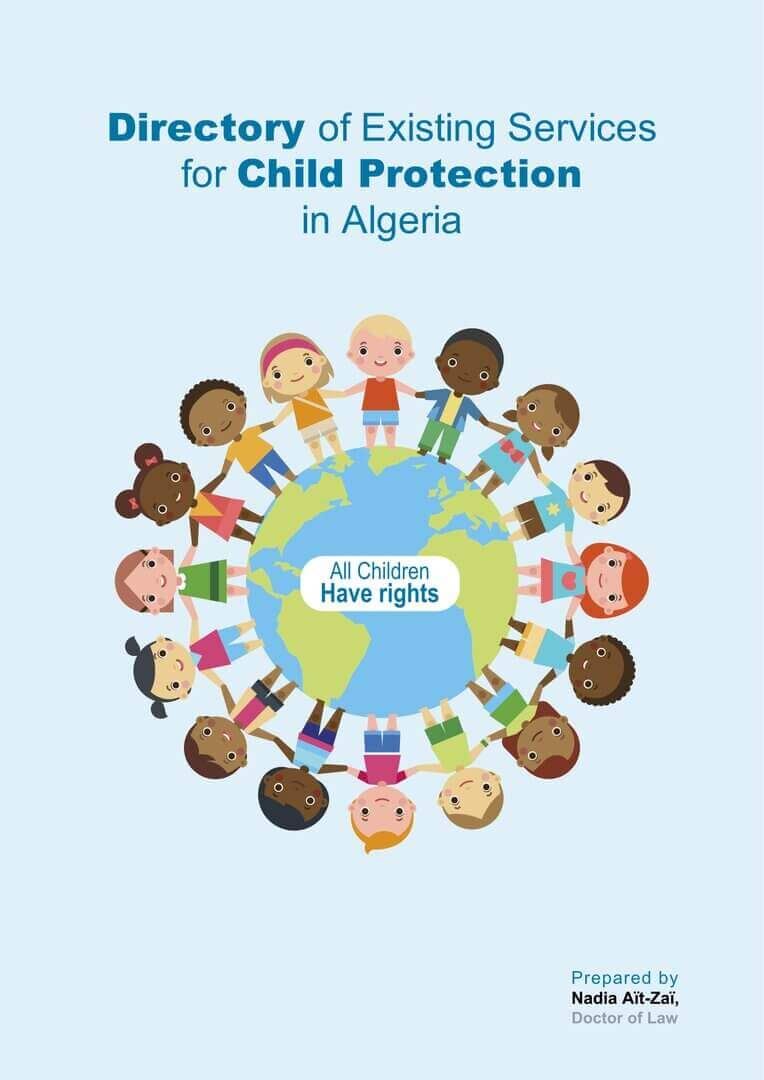
Algeria has been committed to aligning its national legislation with the international conventions it has signed, to protect children. The Convention on the Rights of the Child, along with the two Optional Protocols addressing the sale of children and pornography, as well as the one dealing with the involvement of children in armed conflicts, and the African Charter on the Rights and Welfare of the Child, have been ratified by Algeria. The provision of protection to children have been defined by the law in Algeria, stating the responsibilities of families, parents, communities and the state. The Directory of Social Services (DASS) provides the list, contacts and locations of state and non-state institutions that can be contacted or outreached to provide care and protection for children across the national territories in Algeria. ➤ Nadia Ait Zai, President of CIDDEF & Board Member of the EuroMed Feminist Initiative (IFE-EFI): www.bit.ly/Nadia-Ait-Zai
The first Mediterranean Feminist Forum was organised by the EuroMed Feminist Initiative, in partnership with the Interministerial Delegation for the Mediterranean of the French Ministry for Europe and Foreign Affairs, and with the contribution of the Arab World Institute in Paris, the French Development Agency, Wimbeetech, and Campusna. The forum aimed to contribute to valorising and strengthening CSO networks on both sides of the Mediterranean, while widening the space for cooperation and joint action. It also sought to promote initiatives led and implemented by women’s rights organisations and to support the diversification of their funding sources.
This policy paper was developed to draw lessons learned from a detailed research initiative conducted by Duderi to map the role of civic actors in the education sector in Syria. The research provided an in-depth review of conditions in six regions, covering local circumstances across all zones of political control that have emerged during the conflict. This policy paper aims to synthesize the key lessons learned from the research and offers targeted and actionable recommendations to key stakeholders.
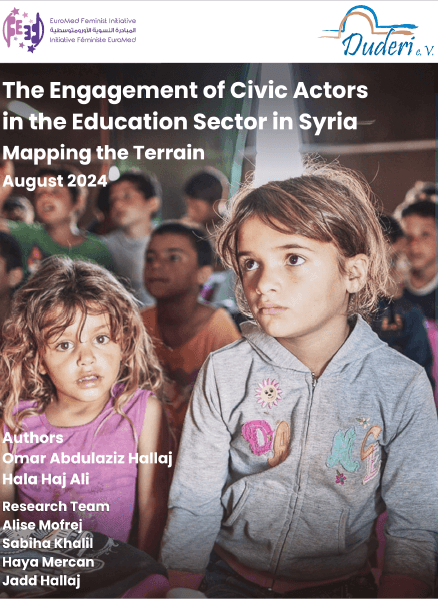
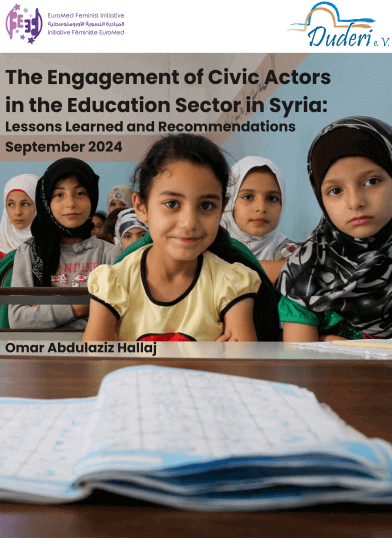
This report presents the results of a mapping exercise aimed at understanding the role of civil society actors in the provision of educational services during the conflict in Syria. It uses a combination of qualitative interviews, extensive desk research, and online verification of CSOs’ work visibility, networking, and reputation to provide a 360-degree view of the conditions on the ground. The assessment was conducted to answer two sets of questions. One focused on evaluating CSOs’ capacity to act as key stakeholders in the education sector. The other aimed to understand how values of social peace and equal citizenship are being interpreted and promoted by CSOs. This report provides a synthesis of the research findings. A subsequent report will focus on lessons learned and key recommendations, which will be issued separately in the form of a policy paper.
This study for assessing VAWG in Syria was conducted by EFI and the Regional Observatory on VAWG within the framework of the project “Implementing the Common Agenda to Combat VAWG and Promote Inclusive Peace Building Processes in Syria,” funded by the European Union (EU). The project aims to contribute to inclusive, participatory and representative decision-making in Syria, through combating VAWG and improving women’s participation in local and international decision-making.
This study presents how the dynamics of exclusion and violence have interplayed with education in three regions of Syria, namely A s Sweida, Ar Raqqa and Idlib. The three analysed regions fall under different authorities: A s Sweida falls under the authority of the Syrian regime, while Idlib falls under the Ta hrir Al Sham Organisation, and Raqqa falls under an authority of self-governance. The study will explore how the curriculum in each of these regions of Syria is shaped by their incumbent authorities, understanding how this subsequently affects the society’s understanding of exclusion and violence based on gender, race, ethnicity, and religion.
This brief seeks to shed light on sexual harassment in the workplace in Jordan, highlighting it as a serious problem affecting women. It can have a devastating impact on women victims, both personally and professionally. The brief focuses on the legal framework, analyzing the factors that enable sexual harassment in the workplace and the barriers to reporting it.